
Stop Competing on Price: The Speed-to-Lead Advantage That Wins Every Time
Written by
Sami Raby
Quick Executive Summary
78% of customers hire the first contractor who responds — not the cheapest.
Contractors texting back missed calls in under 60 seconds close at 30–50%.
Waiting just 30 minutes to respond drops your close rate to 5–10%.
Speed-to-lead is a communication problem, not a marketing problem.
Short answer: 78% of customers buy from the first business that responds — not the cheapest. Contractors who text back missed calls within 60 seconds close at 30–50% of inbound calls. Contractors who call back 30 minutes later close at 5–10%. Speed beats price, beats marketing spend, beats review count. Here's how to win on speed without hiring anyone.
I'm Sami, co-founder of Service Foxx. This is the single sales argument I come back to with contractors more than any other, because it reframes the whole conversation.
Most contractors think they're losing jobs because they're priced too high. Or because their competitor has more reviews. Or because the homeowner wanted someone bigger.
They're usually not. They're losing jobs because they didn't pick up.
The stat that reframes everything
Research across service industries consistently shows: 78% of customers buy from the first business that responds.
Not the cheapest. Not the closest. Not the highest-rated. The first.
When a homeowner has a leak, a dead AC, or a roof that needs fixing, they're not running a bid process. They're solving a problem. Whoever picks up the phone first gets the job. The next four callbacks are wasted — the homeowner already made a decision.
This is called speed-to-lead. And it's the single most reliable predictor of who wins in home services.
Why contractors are bad at it (and why it's not your fault)
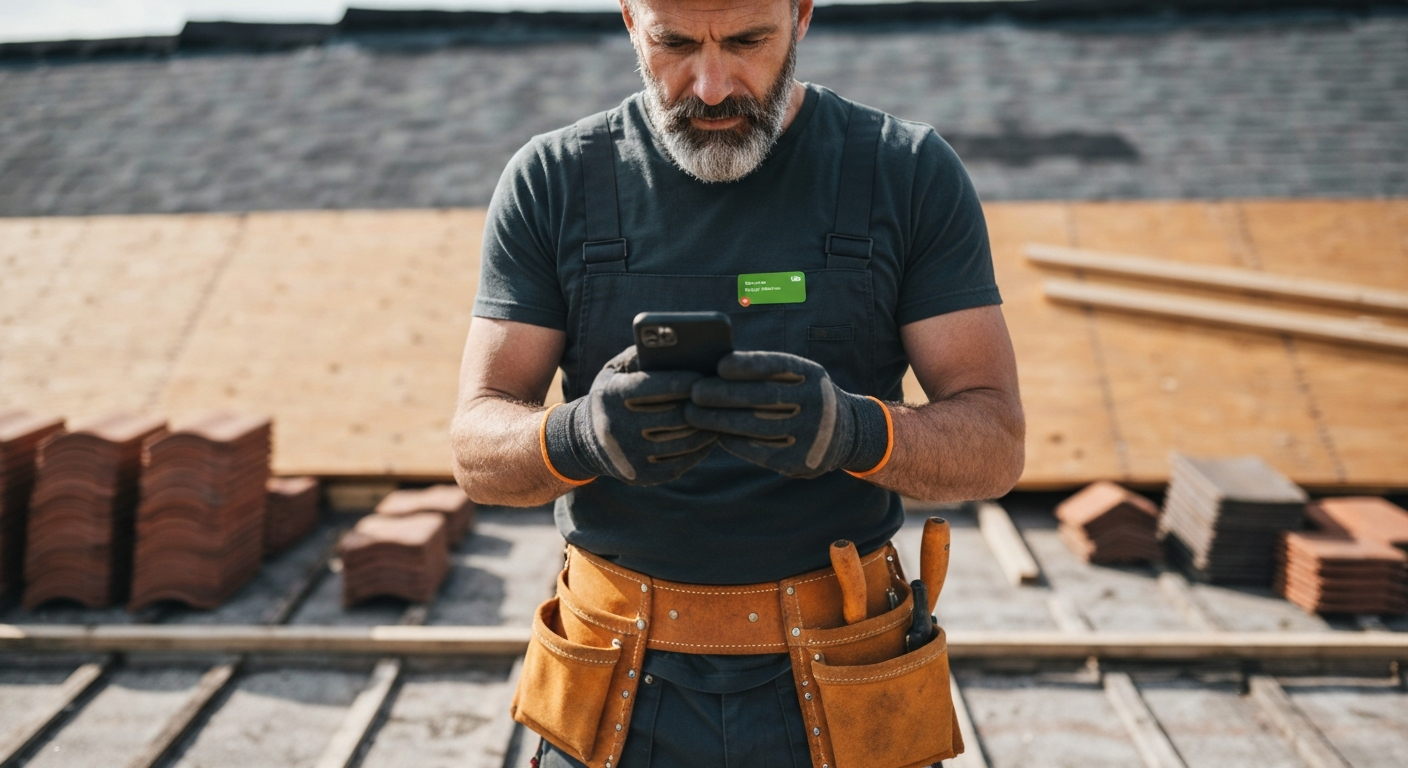
You're not bad at speed-to-lead because you're lazy. You're bad at it because you're on a ladder. Or under a sink. Or driving between jobs. Or wrapping up a tear-off.
The average contractor misses 3–8 calls per week. Not from not trying — from being physically unable to answer the phone while working.
And when you call back 2 hours later, 78% of the time you're too late.
This is why adding a sales rep doesn't fix it. This is why hiring a receptionist doesn't fully fix it. This is why bigger ads don't fix it. More leads coming in doesn't help if you're missing the same percentage of them — you just have more leaks.
Speed-to-lead isn't a marketing problem. It's a communication problem. And it's the single highest-ROI thing you can fix in your business.
The 60-second rule
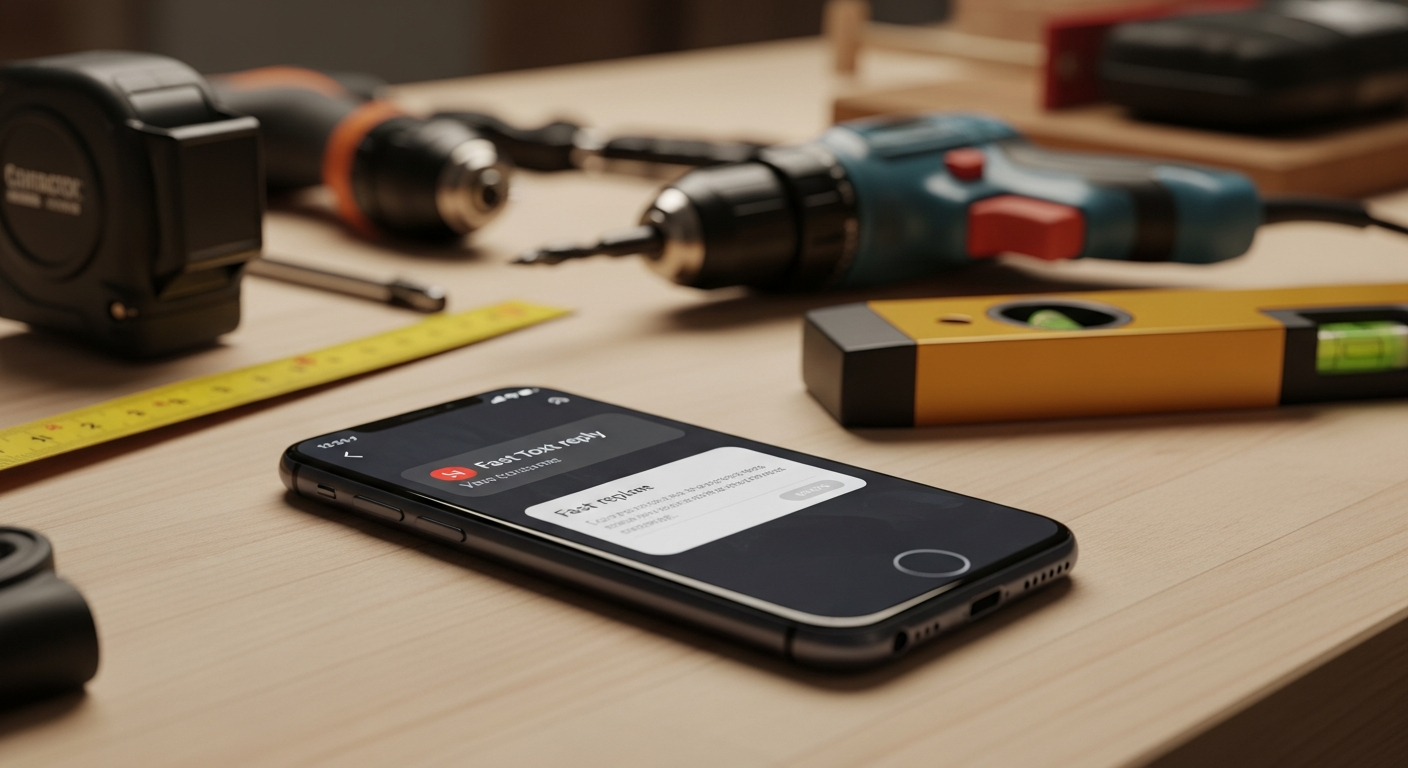
Here's the rule we build every Service Foxx system around: when a call gets missed, a text fires back to that phone number in under 60 seconds.
Not 10 minutes. Not 5 minutes. Under 60.
The text reads something like this:
"Hey — this is [Your Company]. Saw I missed your call. On a job right now but I can text back quickly — what do you need help with?"
That's it. Conversational. Not automated-sounding. Not a "we got your inquiry" corporate bounce.
The homeowner sees a real response within a minute. They reply by text. You (or your system) book them in.
By the time the second and third contractor they called get around to calling back, they've already booked with you.
What this actually looks like in practice
Let me walk you through a real scenario from a Service Foxx roofing client in Georgia.
Homeowner calls at 2:47 PM. Owner (Chris) is on a steep pitch, can't answer. Call goes to voicemail.
2:47:43 PM — Service Foxx detects the missed call. Text fires to the caller's number: "Hey — Chris from [Company]. Saw I missed your call. On a roof right now but I can text back quickly — what do you need help with?"
2:48:11 PM — Homeowner replies by text: "Hey, I have a leak in my master bedroom ceiling, think it's coming from the roof. Can someone come out this week?"
2:48:14 PM — Conversation AI (included at no extra cost) sends: "Yes. Getting you on the calendar now. What's your address and is tomorrow morning or afternoon better?"
2:49:02 PM — Homeowner replies with address and "afternoon works."
2:49:03 PM — AI books the inspection into Chris's calendar for 2 PM the next day. Confirmation text goes out automatically.
By the time Chris climbs down the ladder at 3:30 PM, there's a booked inspection on his calendar that he never touched.
Homeowner calls two other roofers that afternoon. One goes to voicemail. The other calls back at 5 PM. Both are too late. Chris has the job.
The math on what this is worth
Here's the revenue leak framework we use:
| Leak Type | Formula |
|---|---|
| Missed call leak (monthly) | (Missed calls/week × 4.3) × avg job value × 35% |
| Ghost estimate leak (monthly) | (Estimates/week × 4.3) × avg job value × 20% |
| Total monthly leak | Sum of both |
| Annual leak | Monthly × 12 |
A contractor missing 5 calls a week with a $1,200 average job value is losing roughly $11,000 a month to missed calls alone. That's $132,000 a year.
Run your own numbers on our revenue calculator — takes about 90 seconds. Most contractors are shocked by the annual number.
Why this beats a receptionist
A receptionist is $35,000–$55,000 a year in salary, plus benefits, plus you still have to cover nights and weekends somehow. They can't answer calls while they're at lunch, on vacation, or sick.
The missed call text-back system costs $450 a month and never takes a day off. It responds in 60 seconds, 24/7/365. No sick days. No vacations. No training.
This isn't about replacing people. It's about protecting revenue during the hours and minutes where no human can be there.
Why this beats more marketing spend
Here's what most contractors do: their lead flow drops → they increase Facebook ad spend → more leads come in → they're still missing the same percentage → they're just paying more for the same revenue.
Speed-to-lead is free leverage. You're not buying more leads. You're closing more of the ones you already have. It compounds.
A contractor spending $2,000/month on Google Ads generating 50 leads, converting at 15%, closes 7.5 jobs. Fix speed-to-lead and convert at 25%? Same spend, same 50 leads, now closes 12.5 jobs. That's 5 extra jobs per month with zero additional marketing cost.
What a real missed call text-back system includes
What we build inside every Service Foxx account. We also build your website and manage your Google Business Profile, not just the CRM.
- Missed call detection — the system listens for calls that go to voicemail on your business line
- Instant text-back — under 60 seconds, from your business number, in your voice
- Two-way conversation capture — homeowner replies land in a unified inbox your team can see
- Auto-booking — if the homeowner confirms interest, Conversation AI (included at no extra cost) books them into your calendar automatically
- Stage-based follow-up — if they go quiet mid-conversation, a follow-up fires after 2 hours, then next morning, then 2 days
All of this runs behind the scenes while you're on jobs. You never touch it until you're back at the truck — and by then, the leads are already booked.
What this connects to
Missed call text-back is the front door. Everything else in the Service Foxx framework is downstream:
- The leads captured here feed estimate follow-up
- Completed jobs trigger review collection
- Past customers get seasonal reactivation
- After-hours and overflow calls get caught by AI voice answering
It's all one system. But speed-to-lead is where the revenue protection starts.
Next steps
If you want to calculate your exact missed call leak, use the revenue calculator.
If you want to see the text-back system in action on a real contractor account, book a demo.
If you're ready to have it running by end of week, get started here. Setup takes month one, your CRM is running by month two once the phone carriers approve texting.
— Sami
About the Author
Sami Raby
Co-founder of Service Foxx and expert in contractor operations. Dedicated to helping home service businesses scale through high-ticket automation systems that actually work.
Master Your Trade
Continue Learning

GoHighLevel for Contractors: Why Home Service Businesses Use ServiceFoxx Instead
What Is a Missed Call Text-Back — And Why Every Contractor Needs One